Coronary angiography is a diagnostic procedure that maps the heart’s arteries using contrast dye and X-ray imaging. It allows precise identification of narrowed or blocked segments and helps determine the most appropriate treatment strategy.
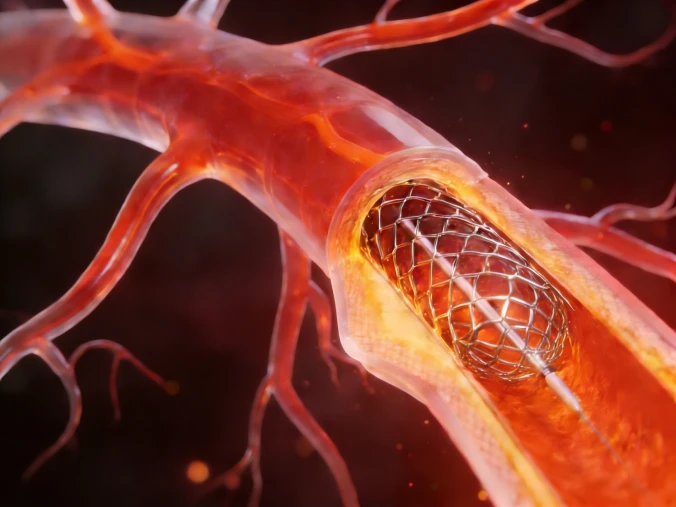
If a blockage is suitable for minimally invasive correction, angioplasty may be performed during the same session. A small balloon is advanced to the narrowed area and inflated to widen the artery. In most cases, a stent (a tiny mesh tube) is placed to keep the vessel open and maintain blood flow.
Angioplasty is less invasive than bypass surgery and usually performed under local anesthesia with light sedation. Patients often recover quickly, with short hospital stays and early return to daily activities.
However, not all blockages can be treated effectively with stents. Factors such as the number of blocked vessels, their location, calcification, and overall heart function guide the choice between angioplasty and surgical bypass. The priority is always long-term durability and safety rather than short-term convenience.
Post-procedure care includes medication to prevent clot formation, risk-factor control, and structured follow-up to maintain artery health and prevent recurrence.